Meet Sudden Denouement Collective Member Kindra M. Austin

Indie Blu(e) writer Kindra M. Austin gives a deeper look into who she is as a person and a writer on Sudden Denouement.

Sudden Denouement's avatarSudden Denouement Collective

The editors of Sudden Denouement Literary Collective know that our strength is our writers. We hope that you enjoy getting to know them through our new Writer Interview Series.

What name do you write under?

Kindra M. Austin. Previously, I wrote under Pammy Pamtastico! I think of Pammy often. She was a real Class F lady. I feel her sometimes, trying to peel back the skin on my fingertips.

In what part of the world do you live?  

I live in the village of Chesaning, a fading tourist town in mid-Michigan, situated on the Shiawassee River. Chesaning was formally known as Showboat City, and fuck tons of people from all over would visit during the weeklong Showboat Festival held in July. Or August. I can’t remember. After 76 years, the Showboat Festival met its demise in 2013, and the Shiawassee River Queen was retired. Probably made into firewood…

View original post 1,429 more words

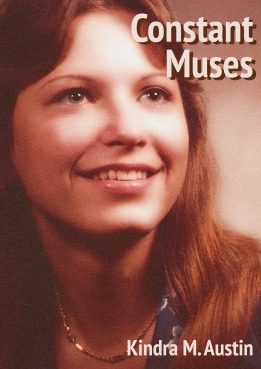
Book Review: Kindra M. Austin’s Constant Muses, by Mariah Voutilainen

Kindra M. Austin’s Constant Muses is a eulogy, a message of comfort and a warrior cry

By:  Mariah Voutilainen

Upon opening Kindra M. Austin’s Constant Muses, I was immediately taken with the  noir-y feel of her poetry.  As Austin’s opening piece suggests, it is “eternally October” in the world that she paints with her rich verse.  Skies are heavy with the weight of autumnal storms, the air thick with cigarettes, tongues dipped in bittersweet alcohol.  Within this October specters lurk: female warriors, a mother with many faces, preserved memories.  It is a séance in which the past is called up to hold hands with the present.

Austin’s verse is brimming with clever language that indicates her command of poetic device as well as quirky turns of phrase.  In some poems the voices conversate; they speak truth through their easy-going innits, sammiches and lookits. In others, o’ers, ‘rounds, ‘tils and romantic description reflect a more formal poetic language.  Throughout, she uses rhythmic and aurally pleasing vocabulary liberally.  This facility with words is a talent that allows Austin to capture her various moods beautifully, and in a manner that can be comforting, melancholy, or disquieting.

The macabre featured in many of her poems shocked me momentarily, but then I came to appreciate the references to blood and teeth (“Regretful Revenge”), viscera bloated with memories (“Bellyful”), the consumption of physical bodies to hold on to the spirits within them (“Garden”), as part of a bigger message of the corporeal tie to the internal and spiritual.  In contrast to that graphic imagery, exasperation predictably oozes from her poems critiquing society; in them she calmly eviscerates the hypocrisy she observes (“Revolution” and “It’s Awful, Isn’t it?”).

One of my favorite poems in the collection is “I Need New Cleaning Supplies.”  Within this short piece I found an exquisite sadness and frustration that is echoed throughout the book:

I sweep you away with my broom, and
wipe the walls clean with bleach.
But recollection
invites re-collection.
You are the dust collected in my corridors.

Anchoring threads are beautifully woven through the collection:  Gin and tonics, menthol ciggies, mothers and daughters.  October and 1987 also appear several times; I wished I could send Austin a note, asking about their importance.  And then I read the prose, discovering that it might have been worthwhile to begin with the memoirs and diary, which shed light on the significance of alcohol and cigarettes, both references to and constant reminders of her mother.  She follows personal memoir with flash fiction; the former details her struggle with a life-changing decision about motherhood, while the latter pulls us into a world of black humor, revenge fantasies and suicide-inducing depression.

The final section of the book, a diary of the month following Austin’s mother’s death, takes us on her journey of mourning.  She is in conversation with her mother throughout, recounting even the smallest details of the funeral preparation with irony: “Funny, I can imagine having a conversation with you, Mom, about the need for funeral luncheon supply stores.  You always did get my humor, and I can hear you laughing at my ranting.”  Austin’s honest delivery and willingness to reveal her complex feelings, from distress and guilt to love and forgiveness, is generous and brave.  It is this bravery and generosity that led me to re-read this book several times, peeling back layers to reveal the sources of such wonderfully emotional writing.

Constant Muses is available for purchase on Amazon.com and Amazon.co.uk, in paperback and Kindle formats.


Mariah Voutilainen is an aspiring American writer who waxes mostly poetic in Southern Finland.  A former teacher and current stay-at-home-parent, she enjoys reading sci-fi/fantasy, flash fiction, and poetry of the medium-dark and romantic varieties.  Daily ruminations on all manner of things can be found on her blog, (re)imagining the mundane.


The Value of Book Reviews

Book.png

Book reviews are currency for the indie author, especially when reader feedback appears on Amazon and Goodreads. That makes sense, considering the weight of word of mouth marketing. I read an article on Impact recently that stated consumers are 4x more likely to buy goods and services when referred by a friend, and 63% of visitors are more likely to make purchases from websites with reviews/ratings.

Why then, does word of mouth seem to fail so many fantastic indie writers? Because the number of Amazon book purchasers who go back to leave a review, or even a star rating, are few and far between. Derek Haines at Just Publishing Advice says listing your Kindle book as free for a promotional period can help stimulate readers to leave a review; however, reviews of free books are even lower than for actual sales. This rings true for me. I ran a week long promotion last year after releasing Magpie in August in paperback. I moved a few hundred free copies of my novel for Kindle, and I have earned fourteen greatly appreciated reviews.

An article published on Written Word Media in 2017 states that book reviews play an integral role within the Amazon algorithm. Research showed that the number of reviews is more valuable to the ranking system than the overall average rating, as long as the average rating is over 3.5 stars. I’ve read many articles pertaining to this magical algorithm that goes by the name A9. If I see the word ‘algorithm’ one more time, fuuhhh…


At the heart of it all, I write because there is a visceral need and roiling passion in the pit of me that commands me to create. That said, writing is how I make a living, and book reviews are pertinent to my success, as they are a part of my marketing plan. I am not alone in this—I have the pleasure of knowing and working with some of the most talented indie writers on the scene. Writers who deserve to make it.

In 2016, Amazon reported that only forty self-published authors sold a million or more Kindle copies within a five year space. Forty out of hundreds of thousands.

I have immeasurable respect for my readers, fellow indie authors, and for small presses; it’s an honor to support the writing community and publishing industry. I want to see small publishing houses and self-publishers thrive. I want to be a part of the revolution that’s birthing dynamic, divergent, emotionally eviscerating, punk rock works.

Please join me. Give your favorite authors gold stars, and hearts in the form of honest reviews.

Peace and good vibes,

Kindra M. Austin

Indie Blu(e) Welcomes Nicholas Gagnier

31154300_10155428144671198_547540031670059008_o


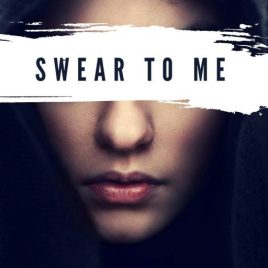
Nicholas is an indie writer from Ottawa, Canada, and former author of the Free Verse Revolution blog, which spawned three full books of poetry, GROUND ZERO (2013); SWEAR TO ME (2017) and the FVR COLLECTION (2018), as well as smaller chapbooks THE KILLING WAGE (2014), LITTLE CITY (2015) and GENERATION WHY (2016).

An advocate of mental health and LGBT+ issues, Nicholas is currently working on his novel FOUNDING FATHERS after a seven year sabbatical from writing books and a followup to SWEAR TO ME, an ambitious anthology which brought together several writers in the name of mental health.

Published Works

(Available on Amazon.)


Free Verse RevolutionFREE VERSE REVOLUTION: THE COLLECTION (2010-2017) is a compendium of works from Nicholas Gagnier’s Free Verse Revolution blog, which ran six years under various banners until its closure in 2018. It includes the exclusive chapbook “Dear Skylar”, featuring contributions from Kindra. M Austin and Kristiana Reed. Comprised of over 180 poems, this is the book that caps off a truly transformative experience.

Buy on Amazon

©Nicholas Gagnier


cropped-wp-image-715562032

Featuring Nicole Lyons, Willie Watt, Phil Benton, Kristiana Reed, Dom, Nathan McCool, Rachel Finch, Rana Kelly, Kindra M. Austin, Sarah Doughty, Eric Syrdal, Ward Clever, Marcia Weber, Laurie Wise, Aakriti Kuntal, Lois E. Linkens, Dennis Earley, Paul F. Lenzi, A. Marie Kaluza, Natasha Kleb Alexander and Christine E. Ray.

From Nicholas Gagnier and Free Verse Revolution, this follow-up to 2013’s Ground Zero once again uses poetry to examine the pitfalls of mental illness and depression. Whereas we were once trying to write our way to a better world, these days we write just to survive the one we inhabit. Featuring 22 writers from all different walks of life, Swear to Me is a story about letting go and giving up ideals any grander than necessary, just to quell the anxiety of living with our ghosts another day.

Buy on Amazon

©Nicholas Gagnier

Book Review: Nicholas Gagnier’s Free Verse Revolution: The Collection (2010-2017) by Mariah Voutilainen

Nicholas Gagnier’s Free Verse Revolution: The Collection (2010-2017) is a farewell describing a difficult but fruitful journey

By Mariah Voutilainen

If this is your first introduction to Nicholas Gagnier’s work, as it was mine, you will find within the pages of Free Verse Revolution:  The Collection (2010-2017) a testament to the power of writing in the face of a life lived with personal traumas and challenges that have led to successes.  In the preface, he writes that “poetry did more than any therapist or medication could,” and this is evident in the poems collected within this eight-part anthology.  It would have been interesting to know where each poem stood in the chronology of his work to get a sense of how his style developed over time in the context of his personal experiences.  Still, in reading, we are made privy to Gagnier’s struggles as a very young writer growing up in a fractured family, the trauma of a close friend’s suicide, his own battle with mental illness, the love and healing that has taken place in the years over which these poems were written.

There is no doubt in my mind that Gagnier’s rhythmic free verse is written to be read aloud.  I found myself wanting to go back after one silent read to belt out the lyrical staccato of poems like “Sagittarius Dream” and “Men ‘Til Breakdown” in the quiet of midmorning.  “Drunk on You” made me wish I had a melody.  More pensive and angry pieces gave me pause; I spoke them softly to hear the form hidden within the flow and found phrases that exorcised the pain of growing up (“Unpumped Blood”), frustration with politics (“The American People” and “How the Fuck”), or the love for a child whose life experience is so happily different from his own (“I Wasn’t Ready (To Love You)” and “Sorry”).

Gagnier makes strong comparisons in his poetry, taking emotional themes and pairing them with seemingly unrelated objects and ideas.  Wrinkled suits herald the demise of a relationship in “I Don’t Love You Anymore”; locational signifiers such as zip and area codes pair with writing poetry about life experiences in “Hashtag Poetry.”   References to mathematics, from algebra to geometry, abound.  I found mentions of electrical sockets (“Pocket Lint Paraphernalia” and “Currents”) amusing but also unsettling.  “Cancer Kindness” was apt; I was taken with the link forged between a decimating disease and human interaction, especially because of its positive end-feel:

they’ll forgive you

how you fall,

and you’ll always be a

medicine the world can

call on.

Just as kindness can be a virulent growth, so can life’s complications yield palliative poetry.  And Gagnier’s poetry has a healing quality, even in its most acerbic moments.

Overall, the poems collected within FVR are accessible and relatable while maintaining a level of complexity that encourages readers to delve deeper to figure out Gagnier’s meaning.  I hoped to find personal connections to his poetry and was not disappointed; I was especially moved by the pieces relating to his daughter and mother.  Truthfully, there were times I felt I was swimming in and around words on the page, only to approach the poem again and discover its truth.  But this slight disorientation was pleasant, much like the spin you take while dancing with a partner—you come back with a heightened awareness of their presence.  My only disappointment is the fact that the publication of this anthology marks the end of Gagnier’s dance with poetry for now.

Free Verse Revolution:  The Collection (2010-2017) is available for purchase on Amazon.com


mariahv is an aspiring American writer who waxes mostly poetic in Southern Finland.  A former teacher and current stay-at-home-parent, she enjoys reading sci-fi/fantasy, flash fiction, and poetry of the medium-dark and romantic varieties.  Daily ruminations on all manner of things can be found on her blog, (re)imagining the mundane.  This is her first book review