Indie Blu(e) Welcomes Clyde Hurlston

Some people state that they have known what they have wanted to do with their lives since a very early age; but Clyde Hurlston was not one of those people. Growing up in a small, working-class suburb of New Orleans, Louisiana; Clyde speaks very fondly of his childhood. “I was very fortunate, in that I had and still have both of my parents in my life up until this very day. My father was a hard working man. He was a tugboat captain for many years, and my mother sacrificed a career to be a homemaker, raising my older brother and I to be the men we are today.”

One thing Clyde often states unequivocally is the emphasis both of his parents placed on education. “Education was paramount,” he says. “Both of my parents demanded that my brother and I do well in school, otherwise there would be consequences,” he says with a laugh. Throughout most of his primary schooling, Clyde displayed signs of being a remarkable child. He was often placed into gifted and talented courses and was always a fixture on the Honor Roll every quarter. After transitioning into both middle and high schools, Clyde would be placed into Honors classes, where students would be placed into a grade but would be using the textbooks and materials of the grade above them.

These opportunities are what led to Clyde’s passions for reading and expanding his vocabulary, as he would try to understand the words he was reading on a daily basis at school. It was also through his school textbooks that Clyde was first exposed to the world of poetry. But when asked how he had come to discover his ability to write poetry, it’s a subject that the writer is often a little reticent to discuss. Because there is a bit of tragedy behind the story of what his friends have called his gift of writing.

“It’s often hard for me to discuss this… but I really don’t know where I would be without writing. Writing is what has helped me cope with the events of life. It has been my therapy.  As I’m often fond of saying, writing has been my salvation. So I have been repaying that debt with ink. And that’s where the title of my book comes from: it’s an acknowledgment of the importance of writing in my life. Though at times it feels like both a gift and a curse, I fear I may not be here sitting and talking to you, if it weren’t for writing. My mind takes me to some pretty dark places. But thankfully, I have great friends and family, and a blank page is always close by.”

When pressed for details as to the tragedy he referred to, the aspiring writer takes a deep breath and begins to share the events with me. “It started way back in 1996,” he says, staring off into space. “I was only 12 years old, and approaching my thirteenth birthday. That summer, just before my birthday, my little cousin Shawn had died. He was only eight years old, and cancer had stolen him from us. But he was the most remarkable person I had ever met. He was blind, but somehow he could always tell who was entering the room before they spoke. He had a little toy car collection, and he could pick up a car, and hold it up to his face and tell you the color, make, and model of that car. It was truly amazing. He was so full of joy, so full of life. But he was also so frail because of his condition. He was the little brother I never had.”

“And after that summer concluded, I started my freshmen year of high school. I was still reeling from Shawn’s death. I’m a very introverted person. I tend to bottle things up. So I doubt anyone truly knew the hole that his death left in my heart. Hell, that hole is still there to this very day. I have never gotten over that. But in my English class that year, we were discussing poetry in class. And our teacher was going to make us write a poem as our assignment that day. And for some reason, she handed us all a tiny piece of paper that was shaped like an angel. And she told us that she wanted us to write a poem about an angel. So something sparked in me that day, and I wrote my first poem about Shawn, because I felt then he was my angel. And I have been writing ever since that day. In some form or another. So that is the reason why my book is dedicated to Shawn. I feel like writing was a gift that he gave me. And I’m trying my hardest not to squander it. I hope I make him proud.”

For anyone seeking to become a writer, whatever their chosen genre may be, releasing their first book is always a milestone in their life. So I hope that not only does Clyde make his late cousin proud, but maybe one day, himself as well. Because I know firsthand many people have told me how much they enjoy his writing, and I believe they will enjoy his first release, A Debt Paid In Ink, which was released on August 9, 2017.

For those who cannot get enough of his writing, Clyde was also chosen to have a piece of his poetry featured in each of the first three volumes of The Cult Magazine releases by Rad Press Publishing.

Clyde currently resides in Marrero, Louisiana.

Clyde is a single man who lives with relatives and their two dogs in his childhood home. Working a full-time job, while writing in every spare moment possible.

You can follow Clyde on his websiteFacebook, and Twitter and Instagram  @adebtpaidinink
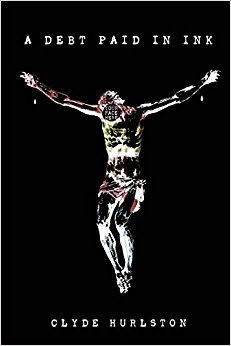

Book cover

Clyde Hurlston seduces rhythmic verse to portray both prose and poetry in this collection of the raw, and viscerally embodied. His direct temperament to provoke lyrically rabid banter, seeks out the authentic grit he explores. “A Debt Paid In Ink” is a boiling body of work, melodically penned to punch you in the teeth.

A Debt Paid In Ink is available through AmazonBarnes & NobleBooks-A-Million, and Rad Press Publishing.

Monday, July 23rd is our first Indie Blu(e) Author Takeover Event!

Indie Blu(e) is hosting its first Facebook Takeover Event on Monday, July 23rd from 2 to 7 pm EST. A fabulous line-up of 10 Indie Authors will “take over” this event page throughout the day and tell you more about themselves and their books. It’s a great opportunity to get to know more about the authors, get introduced to some great books, and network. The focus is on having fun and interacting. There may even be a surprise announcement or two!

2-2:30 pm Auguste Wilde
2:30-3 pm Kindra Austin
3-3:30 pm Kacey Hill
3:30-4 pm Rachel Finch
4-4:30 pm Tony Nesca
4:30-5 pm Susan Conway
5-5:30 pm Nicholas Gagnier
5:30-6 pm John Biscello
6-6:30 pm Melody Lee
6:30-7 pm Georgia Park

To attend the event, sign-up here!


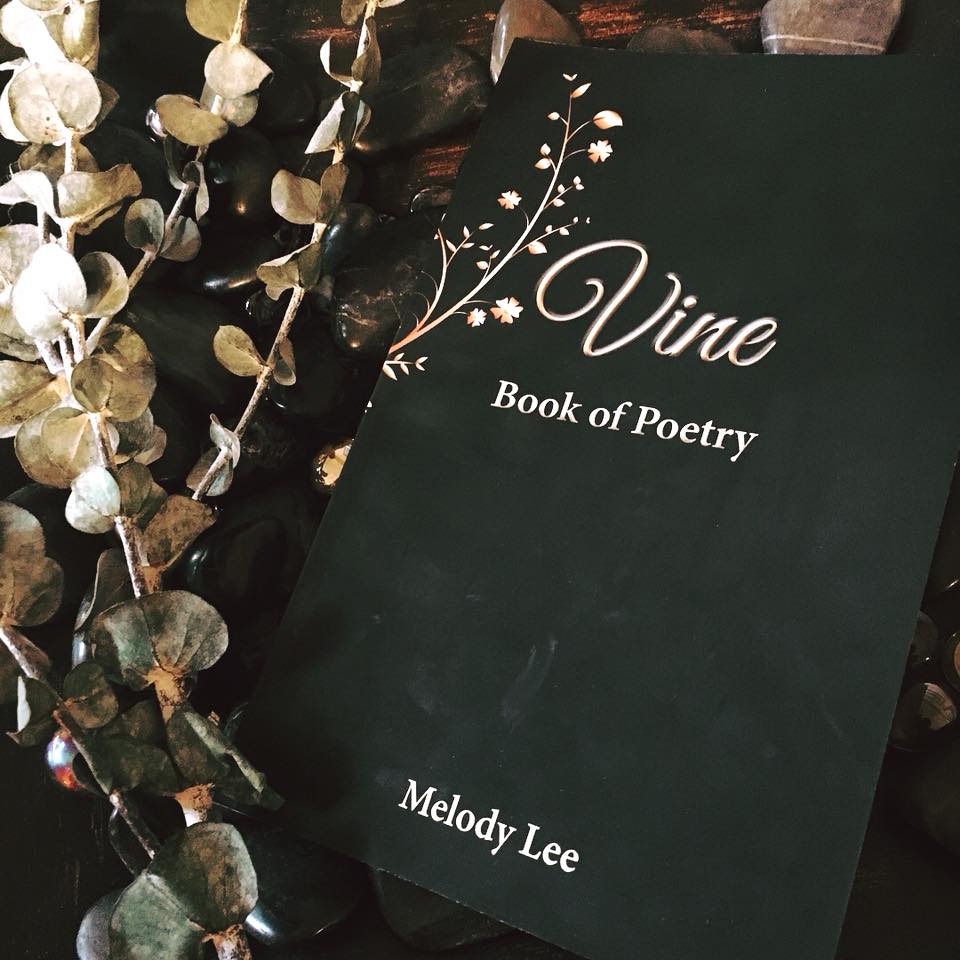
Christine Ray Reviews VINE: BOOK OF POETRY BY MELODY LEE

I have only recently been introduced to the poetry of Melody Lee and had only read a single piece before I dove into Vine: Book of Poetry, her recently released second book.  Vine is divided into five sections: Clematis, Honeysuckle, Jasmine, Ivy, and Wisteria.  Lee provides background information about the qualities and lore of each plant, which helped set the stage for each section as well as provide me with some nifty garden trivia.

What struck me from the very first poem This Is How I Know is how beautiful Lee’s imagery is:

‘It gracefully dances up my spine
Gently wrapping around my heart
And I flourish extravagantly’

One of my favorite pieces in the collection is Cunning Linguist, which appeals to the senses. It is multisensory and tactile, with language such as ‘I wear it like luxurious cashmere’ and ‘I gulp, I sip, swallow.’ My favorite line in the whole book also comes from this piece. She declares: ‘I am a book harlot.’ I smiled to myself and said, ‘Me too!’

Vine is filled with sumptuous love poems such as Coffee, which starts with sensuous lines ‘Pour yourself a cup of steaming coffee/honey, then come pour yourself into me’ but also has an edge that I quite liked the bite of.  Lines such as ‘but we worship each other/on skin and dirty knees’ from Let’s Be Honest or ‘Sometimes poetry is dark and brutal/has fangs and teeth’ from Dear Reader provide balance to the softer poems in the book.

Although much of Vine is concerned with the ebb and flow of lovers, Lee also has a passionate affair with poetry. Another personal favorite, Dear Reader, displays this eloquently:

‘Don’t say poetry doesn’t make sense
while you are eating the words
as if they are a last meal,
as your backbone curves, as goose bumps
rise on your legs, arms.
That is all the sense poetry needs to make.’

Where Lee’s longer love poems are lush and languid, her punctuations of micro poetry are sometimes pointed and bracing, such as the poem Warning:

‘They should have warned you
that little princesses grow up
to be red rocks and raging seas,
fire dragons and warrior queens.’

I also loved the sly social commentary to be found in Lee’s piece Church with such lines as ‘Truth is, I am allergic to hypocrites’ and

‘If Jesus and His apostles were here,
surely, they would be rolling their eyes,
maybe even tipping over tables,
if you would even allow them and their dirty feet
into your spotless, sterile sanctuaries.’

I finished Vine a firm Melody Lee fan with a keen longing to hear more of her voice, particularly her sharp social observations and pieces such as Insanity Invades Like a Tumor, which starts off sounding like another of her love poems, but quickly turns deliciously dark, bringing to mind the writing of Edgar Allen Poe.  Good thing her first book, Moon Gypsy, is already on its way.

Vine: Book of Poetry is available through Amazon and other major retailers

Candice Louisa Daquin Reviews Nicholas Gagnier’s Leonard the Liar

As a kid I read a short story in a magazine that has stayed with me ever since, the poignancy of the story was so powerful I never forgot it. When you read a lot of fiction it takes a unique tale and way of conveying it to be unforgettable, I could probably name all the books I’ve read that have had that impact.

Which is why, reviewing Gagnier’s book has been such an unexpected experience. His little novella is one of those rarified stories I won’t ever forget, alongside Françoise Sagan’s novella, Sunlight on cold water, which has quite a lot in common with, whilst not being in any way similar. I don’t, however, want to compare this book with others; it would be too easy to say Gagnier could be the next Paul Auster (but he could) or that his writing has hints of Flaubert’s tragi-heroine Emma in Madame Bovary (which it does). Neither is it sufficient to note Gagnier has the phantasmagoric echo of older writers like Gabriel Garcia Marquez’s Love in the Time of Cholera and yet simultaneously,  is very much a writer of his generation the way the Beats poets captured theirs. Nothing will truly sum up his alacrity with words and conveying emotion, you’ll just have to read it for yourself.

I will say, this proves novellas, which are making a strong come-back in the field of fiction, are a force to be contended with. In many ways it is harder to put into a short story, everything, yet we know by the likes of Roald Dahl (Kiss Kiss/ Over to you), that it’s not only possible, it’s like an extension of a favorite poem. Gagnier has that alacrity of verse, and his characters get under our skin very quickly and stay there. Of course, the protagonist, Leonard (who is not a liar) has the greater relationship with the reader, but Gagnier pulls off some very believable and well-rounded female characterizations as well as a slew of side-fellows who bolster the credibility and believability of his storytelling.

With the line; “Death is the ultimate break-up,” this novel plunges the reader into a fast-paced emotional rollercoaster, imminently relatable for anyone who has suffered loss or queried the fates. There are some classic lines that complement the strength of the story, including the retort; “Do you always talk like you’re already dead?” There is a lot of pathos and dark humor too; “If he’s a douchebag supreme, you’re engaged to marry him and he’s spending time with dying ex-girlfriends behind your back.” There’s also heart-stopping matter of fact horror and grief alongside a savvy understanding of the male psyche and human condition, this alongside a backdrop of death, which much like a classic black comedy, the theme of death prevails but is not off-putting.

When Leonard considers that; “You are doing this to see how you are,” that’s the crux of his experience thus far, but not his entirety. Leonard is a man who believes dishonesty is the devil’s playground yet continues to struggle to tell the truth, believing himself a broken soul who only messes up everything good he is given, this, therefore, is his story of redemption and discovery. As he says of his own catharsis; “Mom and dad left a house and a gaping hole in the ground. It took two decades to build my own house over them.”

Gagnier’s storytelling is at once a simple shock to the system, as it is wily and philosophical, it would not do his work justice to say he’s a modern author, because he has the informed maturity of a hundred voices previously working their way through his creative process. I am reminded of some of my favorite movies in the visuals this story provoked, namely The Rivers’ Edge, for it has a gritty, bittersweet undertone of youth turning into middle age, infatuation becoming love, connections transforming to loyalty, and the fragility of life. As Leonard says; “Every moment you spend planning for something to go wrong is one less moment you’ll have, in the end, to make things right.” Fortunately, Gagnier ensures his character arc is redemptive and profound, you won’t forget his little book any time soon.

Leonard the Liar is available at Amazon.com


Indie Blu(e) Welcomes John W. Leys

John W. Leys is an indie poet/author from Redmond, Oregon. He currently posts his work on his blog Darkness of His Dreams, which he started in 2016. John has been writing poetry since he was 14 years old and has had his work published in a variety of small publications, including Omnibus—the literary journal of the University of South Florida, and Byronmania—a now-defunct online journal dedicated to the life and works of Lord Byron. He is a contributor to Blood into Ink and has been a frequent guest contributor to the GoDogGo Cafe, and is one of the poets featured in Nicholas Gagnier’s upcoming book All the Lonely People.

John was born in Long Island, New York, but was raised in Albany, Oregon. He began writing poetry in high school, largely inspired by the lyrics of the Beatles and Bob Dylan. John served five years in the US Army from 1991-1996 and was stationed in Gießen, Germany and Ft Sam Houston, TX. He received a Bachelor of Arts Degree in Religious Studies from the University of South Florida and did his Master’s in Judaic Studies at the Graduate School of the Jewish Theological Seminary in New York City. When not writing he enjoys playing one of his five ukuleles and has been known to record music under the name Elijah Wilbury. He has a strong interest in philosophy, especially the ancient school of Stoicism. He currently lives in Redmond, Oregon with his wife—Justine, his son—Tristyn, their three dogs, and two cats.

John writes in a variety of poetic forms on a wide variety of topics. While he generally writes un-rhymed free verse, he generally lets the poem itself determine the form it takes. His writing draws on his personal experiences, world events, philosophy, religion, mythology, and whatever else inspires him at the moment. He takes to heart Allen Ginsberg’s advise that “To gain your own voice, forget about having it heard. Become a saint of your own province and your own consciousness.” and strives to write authentically and be true to his own poetic voice.

John has been influenced by a variety of poets and lyricist including Allen Ginsberg, Lord Byron, Walt Whitman, Bob Dylan, Catullus, Pete Townshend, Ted Hughes, John Keats, George Harrison, John Milton, TS Eliot, Sappho, Sylvia Plath, and many many others.

John is currently working on his first book of poetry, Darkness of His Dreams, which will be released later this year. He also has plans for a second book composed of mythologically inspired poetry and is working on a longer prose project about the mythological/legendary history of the British Isles.

PUBLISHED WORKS

COMING SOON:

DARKNESS OF HIS DREAMS (2018)

Darkness of His Dreams is an intimate journey by way of verses—a sequence of poignant and thought-provoking ruminations. Readers will travel the ages through the keen lens that Leys has trained on history, philosophy, humanity, and his own life experiences.

Walls full, pencil broken
Poetry flows on, scratched into the floor,
A spiraling binding protection circle of words
Writ with a broken bloodied fingernail.

Darkness of His Dreams is fine bourbon. Drink Leys’ words and feel pleasantly full.