Indie Blu(e) Welcome Faye K. Brown

Faye K. Brown started her poetic journey as early as she can remember. Pen and paper have always remained close to her heart throughout her life. On social media she has been writing publicly since 2015 via the Black Orchid Poetry and FK Brown Poetry Facebook and Instagram platforms. Her debut poetry book “Beautifully Damaged Things” was independently released April of 2018, and she is currently working on her second collection.  Black Orchid Poetry is an open platform for writers of all stages. Brown offers live poetry book reviews to promote the work of fellow writers, and she provides the opportunity for fans to post their work to the page under “Spotlight Poetry” events.  Anyone and everyone is welcome to send in their poetry to test the waters of writing publicly, and also gain exposure to grow their pages.

Brown has focused her energy on finding artistic outlets to emotionally navigate living with and experiencing depression, anxiety, bullying, eating disorders, abuse, and just feeling out of place in the world. Whether it is music, painting, or writing, her message has been and always will be that we are not alone in what we experience. Throughout all hardships endured, she has found her passion is to uplift, motivate, and provide direction so people can engage in what they want most out of life.

Connecting with people has always felt difficult for Brown. Poetry is one of the ways she can provide comfort to those who seek it. Her style of writing doesn’t always focus on positivity, it is based on real emotion, and life, which is messy. Currently residing in Minneapolis, MN, Brown spends her time reading, writing, painting, discovering new music, new art, upcoming writers, and spending time with close friends and family.

Black Orchid Poetry
Facebook
Instagram
FK Brown Poetry
Facebook
Instagram


Published Work

Available at Amazon.com

Beautiful Damaged Things

Beautifully Damaged Things is a collection of poetry written by FK Brown. Her words take readers through a journey of love, heartache, and redemption through real experience and lessons learned. FK Brown invites you to experience both her heart and mind, as she poetically elaborates on her take on life, love, loss, and hope. Her end goal is to ensure those who choose to dive into ‘Beautifully Damaged Things’ understand that no one is ever alone in what we feel and experience in life.

Nicholas Gagnier’s Review of Vine: Book of Poetry by Melody Lee

Some works- be it visual, musical or, in this case, written- are immediately apparent as a labour of love and appreciation for the craft they’re derivative of. There is a metaphysical manifestation in their creation, love of a craft for the craft itself. You can find examples of this phenomenon in any creative industry. The most immediate example off the top of my head is Stephen King, who probably could have retired decades ago and deprived us of some great works. He writes because he loves to. Donald Glover doesn’t have to be Childish Gambino in his spare time, especially with his level of success. He does it for passion.

You can see these energies in Lee’s Vine: Book of Poetry. There is excitement hiding in the way she turns syllables and matches sounds, almost effortlessly at times. There is little social justice warriorism here, and when her feminist side does come out, like in the four excellent lines that make up Warning, virtue signaling this is not, but a deftly applied example of feminine strength.

“They should have warned you

that little princesses grow up

to be red rocks and raging seas

fire dragons and warrior queens”

 Warning by Melody Lee

Instead, Lee tends to ride the line between the universal human experience (Education, November) and the investment in her art (Indelible, Death Lives in the Sepulcher of My Soul) with grace. References to her inspirations abound, Lee is a product of those who came before her, an amalgam of styles she has made her own.

The book is cleverly divided into semi-thematic chapters, each named for a type of vine (Clematis, Honeysuckle, Wisteria). At first, I was perplexed by the lack of an index, until I finished the book and found a helpful appendix to return to previous pieces.

“Wayward November winds

Caress my bare skin

Like dead flowers and silky petals of chrysanthemums”

November by Melody Lee

Overall, Vine: Book of Poetry is an enjoyable read. As a father to a six-year-old girl, I am often on the lookout for books I can pass down to her alongside my own, and I am happy to say Melody Lee’s little book squarely fits into that category. I wholeheartedly recommend it.

Review by Nicholas Gagnier, FVR Publishing

Vine: Book of Poetry is available now at Amazon.com and through other major retailers.

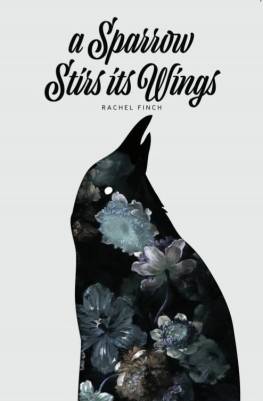
The Innocence Is Haunting: Excerpt from Rachel Finch’s A Sparrow Stirs its Wings

We were timid girls,
that hadn’t known it until
we weren’t anymore.
Taught how to keep our lips closed
and our legs open,
too small to know why until the first
hit,
too small to know how to stop the next.
We were a little nest of sparrows,
huddling to keep warm when the dark drew near,
too weak to sing, too fragile to fly.
She said to me, “how can you fear the wolf
if you’ve never seen his teeth bared?” and I
thought back to the days I would
reach out my hand, with no knowledge of the bite.


A Sparrow Stirs its Wings is available at Amazon.com

front cover

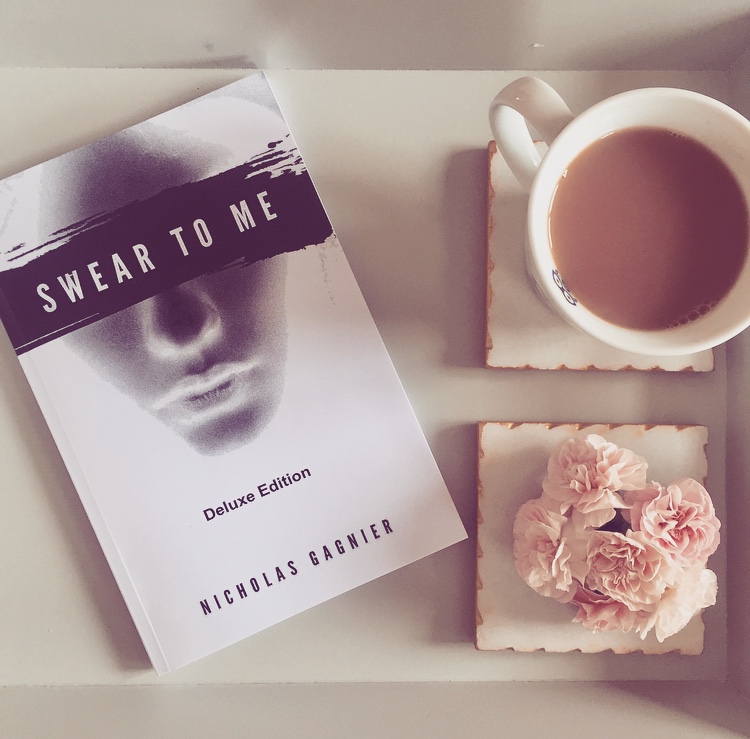
Kristiana Reed Reviews Nicholas Gagnier’s Swear To Me

Swear to Me, an anthology of struggle and survival from Nicholas Gagnier, is a triumphant reveal of lonely hearts which aren’t so lonely after all. It appears a slim book of poetry when in fact it is the friend checking in on you. The friend who makes you a hot beverage or pours you a drink. The friend who listens without questions. The friend who doesn’t shrink from the boxes you’ve labeled ‘MADNESS’ but helps you unpack them. The friend who with just a smile, call or brief squeeze of your hand says: ‘You’re still here and I’m so glad you are.’

There is an undeniable sense of community in Swear to Me. Gagnier himself comments on the contributing writers being ‘the heart of a message this book represents.’ They are the chorus swelling behind Gagnier’s honest, raw solo. The standouts for me were Christine Ray’s ‘Wrecking Ball’ and Nicole Lyons’ ‘The Mmm of Her’. This chorus hits a crescendo with ‘A Room So Still and Quiet’ – a culmination of the powerful, healing voices Gagnier evokes in his poem ‘Survivors’ – they are the ‘light that refuses to die.’

However, this anthology is also crafted in the knowledge we don’t all want battle drums and war paint; sometimes we just want to know we are not alone, we are understood. Gagnier and his words are the close friends we all need and deserve and whilst some poems ignite a fire in your belly, others nod with understanding or wrap you up in shaking, ‘we can do this together’ arms. ‘A Normal Life’ is one of the most touching odes to struggle and survival I’ve ever read:

‘you are my beacon, even brighter

overcompensating madness

in the maddest of ways.’

It’s love. Battle drums, war paint, and love. Love of yourself, others and life itself – embracing the madness as your normal. Letting the walls crumble, the expectations you are something other, pack their bags and realizing the home you want to build is inside you with a ribcage scaffold. ‘Ten Year Story’, ‘Beautiful Human’ and ‘Longhurt’ are other personal favourites which all remind me of the importance of love and acceptance.

Finally, like all good friends, you will always have fond memories to reminisce about during your darkest and brightest days. The friend I found in Swear to Me is no exception. Upon finishing this anthology, I’ve returned to two poems in particular time and time again. ‘Homeward Legend’ reminds me the heart on my sleeve isn’t a weakness, and my story is not over. ‘Almost Happiness’ reminds me we do not have to be everything all at once – we don’t have to bottle up the darkness and strike false smiles like matches because:

‘Almost happiness is better

than none.’

This anthology was a long time coming (ten years) and yet I’m glad because in it Gagnier displays his heart for all to see and touch, and in this act of catharsis gives you the courage to do the same. To live unashamedly in the dark and in the light.

Swear To Me is available on Amazon.com, Amazon.com.uk, and Book Depository


Kristiana Reed day dreams, people watches in coffee shops, teaches English and writes. She is a curator on Blood into Ink, a collective member of The Whisper and the Roar & Sudden Denouement, and blogs at My Screaming Twenties. She is 24 and is enjoying the journey which is finding her voice.

Mariah Voutilainen Reviews Anthology Volume I: Writings from the Sudden Denouement Literary Collective

Sudden Denouement’s Anthology Volume I: Writings from the Sudden Denouement Literary Collective demonstrates divergence in a multitude of ways

In late 2017, not long after I had started my own poetry blog on Word Press, I came across an intriguing site.  Its black and white vintage photos and classic layout invited me in.  The poems I read on that particular day were uniquely honest, full of rich free verse and wonderfully chosen words, so I chanced a look at the submissions requirements.  Right at the top of the page, in neon lights: “Hell- -here” it greeted potentials; the “o” and “T” fizzled out.  I chuckled with anticipatory glee, for under the classic front, something mischievous and dark lay there.  And as I read more of the collective’s poetry and prose, I did indeed feel the pull of Sudden Denouement’s careful attention to what it calls “divergent literature,” although I had yet to clarify with certainty what that meant.

In SD’s Anthology Volume I:  Writings from the Sudden Denouement Literary Collective, I found the answer.  In fact, this book served as a literary map leading me through landscapes of the human experience not found in other poetry and prose that I had read elsewhere.  This is due in part to the curators’ attention to diversity of experience and culture.  I marveled at the harmony of voices, each speaking truth from its corner of the world.  Each writer here has a part that blends in with the others, yet each piece has a distinct melody, a siren song that demands attention.  Trust me when I say that this is an odyssey not for the faint of heart; there is no gentle introduction to that world.

On the contrary, the book opens strongly, challenging readers to question their own views about what beauty and meaning in literature should be, what being a writer is.  The founder of the Sudden Denouement Collective, Jasper Kerkau, exclaims his writer identity is “anointed by almighty forces…to stand in the shadows and pay the price for all the beauty and unhappiness in the world.” (“I am a F*cking Writer!”) “These words have no meaning, when they sit on your screen,” writes Matthew D. Eayre in his poem “Subjective”.  In “On Becoming a Writer,” Christine E. Ray bemoans the possible isolation and invisibility: “…she felt like she was calling out her truths/into an empty desert landscape.”  Erich James Michaels likens the origin story of the poet to purposeful self-mutilation and self-removal from mainstream society (“Genesis”).  All of these are fighting words in a battle to speak truths that may not be acceptable to the mainstream but are vitally human.  To write in this divergent community is to steel oneself against a societal imperative to be vanilla in a land of a multitude of hidden and strangely delicious flavors.

There is no safety net in this world, either, and it is exhilarating.  The first two-thirds of the anthology jump from birds pecking at veins and skin (Ra’ahe Khayat’s “birds & h e a r t s”) to the regret of a missed life (Mick Hugh’s “Dream catcher never understood the bus schedule”) to the irony of a world in which everyone is forced to achieve the American dream (David Lohrey’s “Glass Ceiling”).  There are dark and desperate things, too, experiences thrown like blood and sometimes entrails onto the pages.  Henna Sjöblom’s “Miscarriage” is hard to forget for its painful description of the loss of an unwanted baby “I thought I could make something beautiful/out of my shame”.  Georgia Park’s “Weekly Meetings” made me uncomfortable, an invisible voyeur at a very charged gathering of Overeaters Anonymous.  “Feel up my female…I quite like the emptiness settled in the pit of me” Kindra M. Austin taunts in “Because I’m A Whore Who Asked For It,” as she succinctly details disgusting things that are done to women under that blanket excuse. These three pieces are not the only ones that reminded me of the aspects of human existence about which we are usually discouraged from asking lest we appear too curious, too unaware, too privileged.

Throughout, form and function, captivating lyricism and masterful usage of poetic devices abound.  But these are not tricks:  The stunning repository of words used and construction of phrases seamlessly blended.  I was repeatedly awed by the stories told, wishing for nothing more than continued passage into the world laid bare within the pages.  And yes, I would be remiss if I did not mention that multiple forays are required if only to immerse oneself in the minds of S. K. Nicholas and Jimmi Campkin, both of whom write prose that manages to be both shockingly sordid and beautifully compelling.  To chuckle at the humor that partners discontent in Oldepunk’s poetry.  To breathe in the headiness of Aakriti Kuntal’s lush and captivating similes.  There are gems on each page that cannot be missed, and sometimes I found them as I let words wash over me without specifically searching for meaning.

By the time I began reading the final third of the Anthology, I wished for respite from the unearthing of discontent and the unforgiving barrage of reality, even as it was sometimes cloaked in fantastical imagery.  And a partial reprieve came in the form of odes to the seasons: “The Marigold of months has sure begun./Fling back the shutters and let down your Hair…” (Lois Linkens’ “the Yellow month”) and Spring has “a vessel/for the softest fragrance” (Iulia Halatz’s “Song of Spring”).  There are testaments to romance and even epic love like Eayre’s “Out of My Hands,” but little if any frivolous romanticism here, just reality painted in elegantly brash words and unique imagery.  Finally and fittingly, remembrances of death serve as the beginning of the end of the Anthology.  In those poems and prose, I saw the openness of heart and strength of spirit required to allow total strangers to see the pain of losing a loved one.

Sudden Denouement’s Anthology exposes and breaks many of the taboos of being truly and unashamedly human, giving us permission to look at and embrace them in the moment of reading. I was allowed a glimpse into the writers’ souls; comprehending their words was an exercise in the development of understanding human nature.  This is a world in which the heaviness of life weights everything down until it is distilled—frustration and hate, love and unfiltered sex, bodily urges, addictions, the complexity of human interactions.  Descriptions are brightly painful in some cases, transparently critical in others, but always smack of truth.  Divergent work demands that there are no holds barred; the writer reveals everything, and cuts close to the bone, even his or her own, in order to create a pulsating, living amalgamation of words.

Anthology Volume I:  Writings from the Sudden Denouement Literary Collective is available through on Amazon.com and Amazon.com.uk.
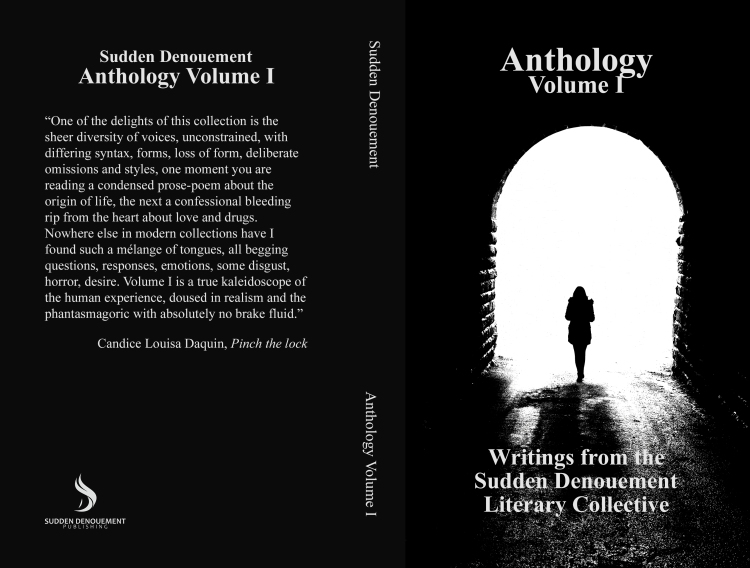
 

SD Anthology_Createspace_Reformatted_Cover_5-28-2018